Why BAC estimation cannot decide if you can drive
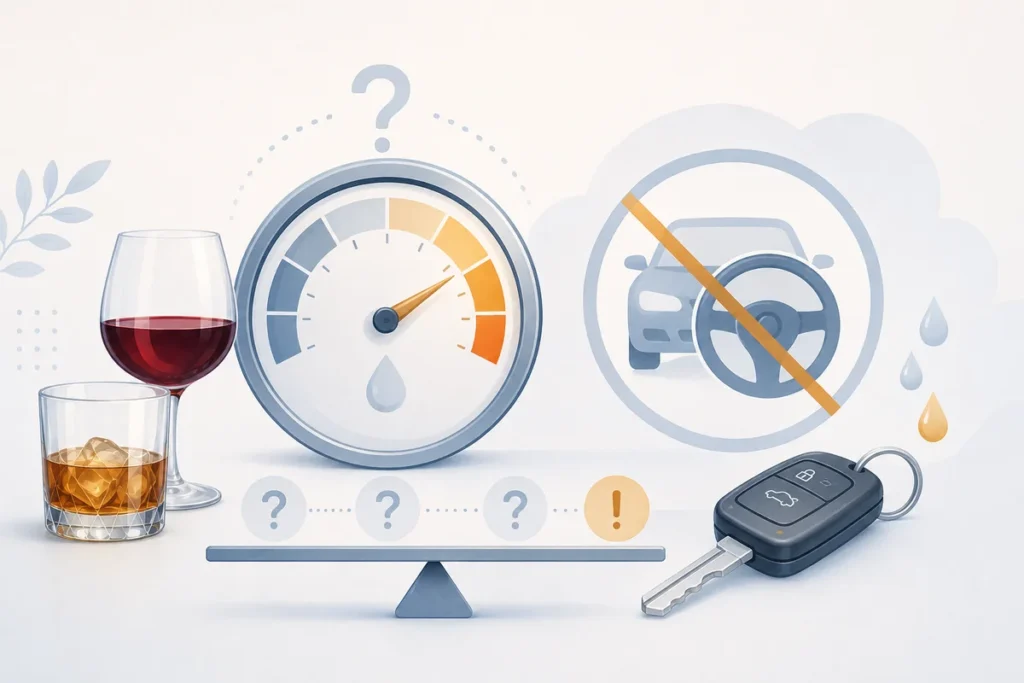
An in-app BAC estimate is only an approximation based on the information you enter. It is not a measurement, legal assessment, or basis for deciding whether to drive. After drinking, do not drive—plan public transport, a taxi, or a sober driver instead.
What a model shows, and what it cannot know
A model may create an approximate curve over time after you enter drinks, volume, strength, and timing. It can be useful for noticing that alcohol does not disappear with the last sip. It does not have access to the full picture of your body or circumstances.
Real concentration and how you feel can be affected by drinking pace, food, sleep, medication, fatigue, health, and individual metabolism. Entry quality matters as well: an underestimated glass or an omitted drink changes the result. An app cannot verify that your information is complete and cannot replace a breathalyser measurement.
Seeing a low estimate or a falling number does not make that number true at that moment. It also does not say whether you meet requirements where you are. Driving rules vary by place and can change; the app does not interpret them.
Why “I feel fine” is not enough
Feeling fine after alcohol is not a test of driving ability. You may feel confident while attention, reaction, or risk judgement is still reduced. A shorter or unsettled night after drinking can also affect concentration the next day.
An estimate should not change that principle. Combining an orientation number with “I am okay now” can create false confidence. BAC in an app is not permission to drive, legal advice, or proof of sobriety.
For example, two people may enter the same drink at the same time but consume it differently, respond differently, and rest differently overnight. The model starts with similar information, yet it cannot measure either person’s actual condition. That is why it must not answer “can I drive now?”
Observe patterns, not driving eligibility
Entries can serve a calmer purpose: noticing how many grams you usually record on an evening, whether a weekly rhythm repeats, and whether you need to plan a safe way home earlier. Grams make different drinks easier to compare than a count of “glasses”; the app calculates them automatically from your entries, and /en/how-to-calculate-grams-of-pure-alcohol/ explains the calculation.
You can also notice whether drinking evenings come before mornings when you expect to drive. That may help with planning, but it does not turn the app into a breathalyser. Where alcohol is involved, the decision is simple: do not get behind the wheel.
QS AlcoRhythm
/en/apps-en/qs-alcorhythm/ is for observing habits and entries over time. Any BAC estimate is strictly orientational: it is not a measurement, legal advice, or permission to drive.
Observe your weekly rhythm with QS AlcoRhythm
QS AlcoRhythm helps you calmly track drinks, weekly limits and history — stored locally on your device, without an account.