

Articles
Practical articles on mindful alcohol observation — without lecturing or medical promises. Here you will find short guides on grams of pure alcohol, standard drinks, weekly limits, local-first privacy, sleep patterns, and why apps should not decide whether you can drive.
Each text is written for calm habit tracking: numbers as reference points, not verdicts. If you want a tool that puts this into practice on your phone — with entries stored locally and no account required — see the QS AlcoRhythm product page.
The articles complement the app; they do not replace a doctor's advice or individual health guidance. Sources are linked at the bottom of each piece; we review them periodically so examples stay aligned with current public health education.
-
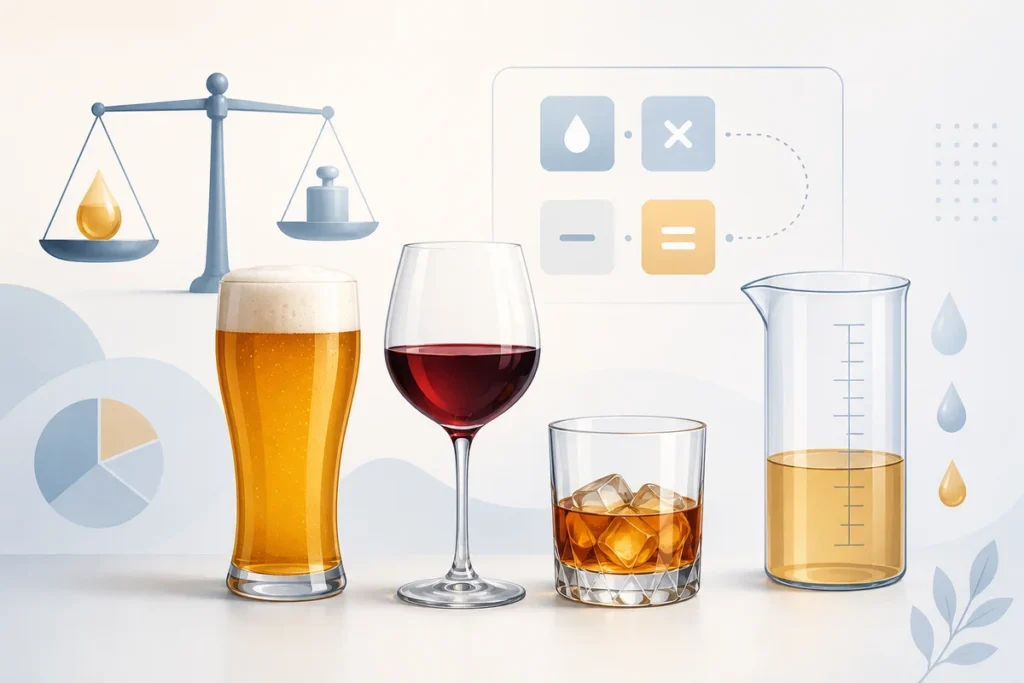
How to calculate grams of pure alcohol in a drink?
Understand how volume and alcohol strength (% vol. on the label) become grams of pure alcohol (ml × % vol. × 0.789). Examples for beer, wine and spirits.
Read article -
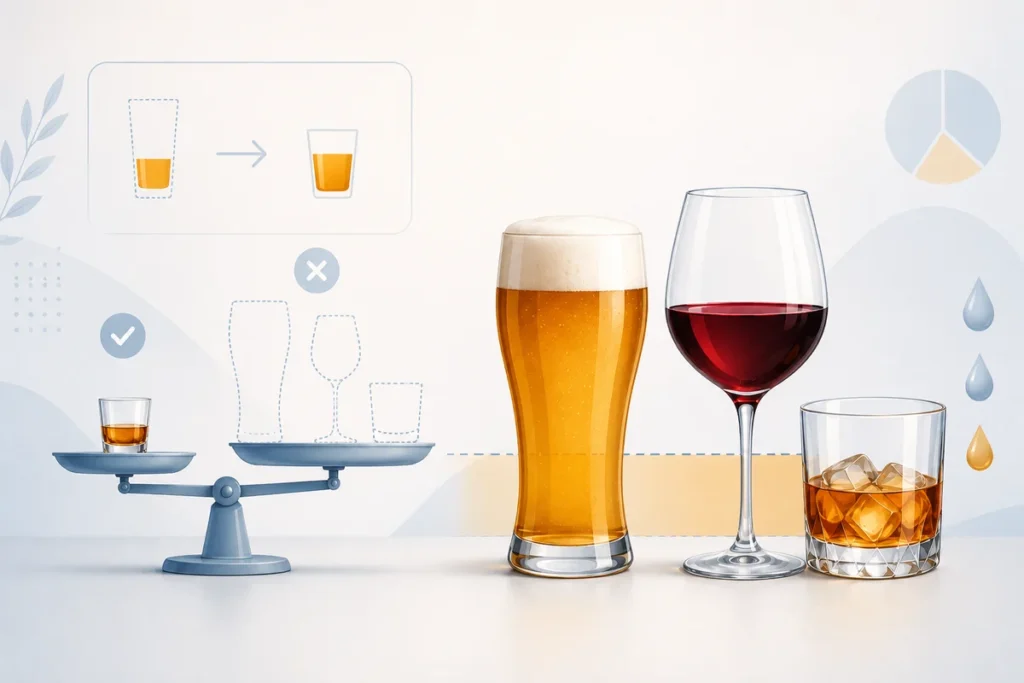
Standard drink vs actual alcohol amount
A standard drink is roughly 10 g of pure alcohol, but a pub pint or generous wine pour often contains more.
Read article -
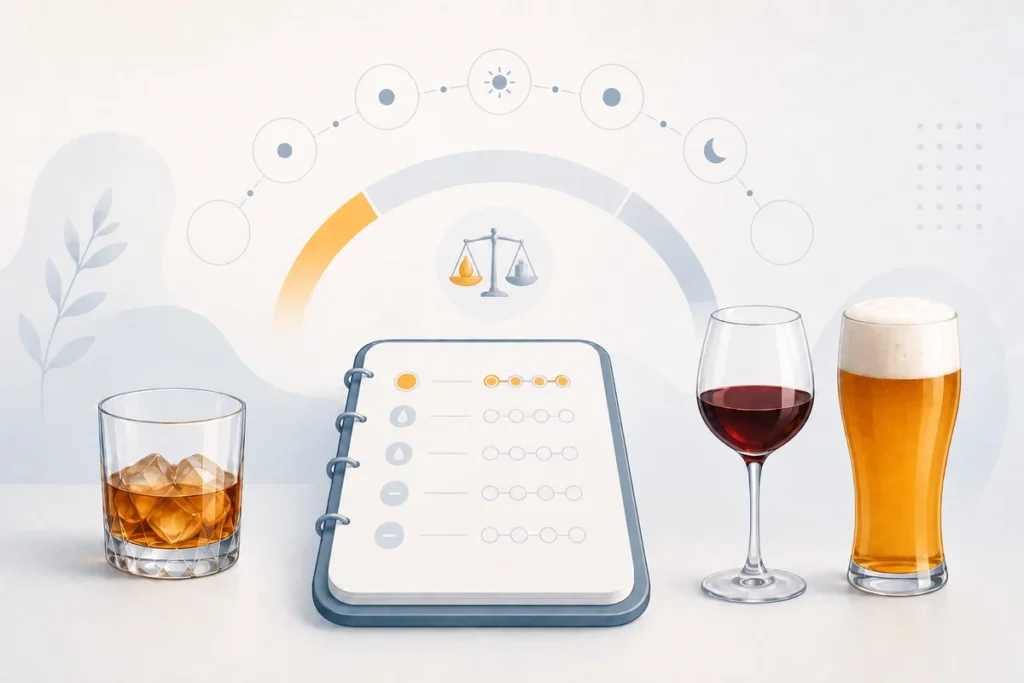
Why track a weekly alcohol limit?
A weekly rhythm gives a calmer picture than daily scorekeeping. A limit is a reference point, not a verdict.
Read article -
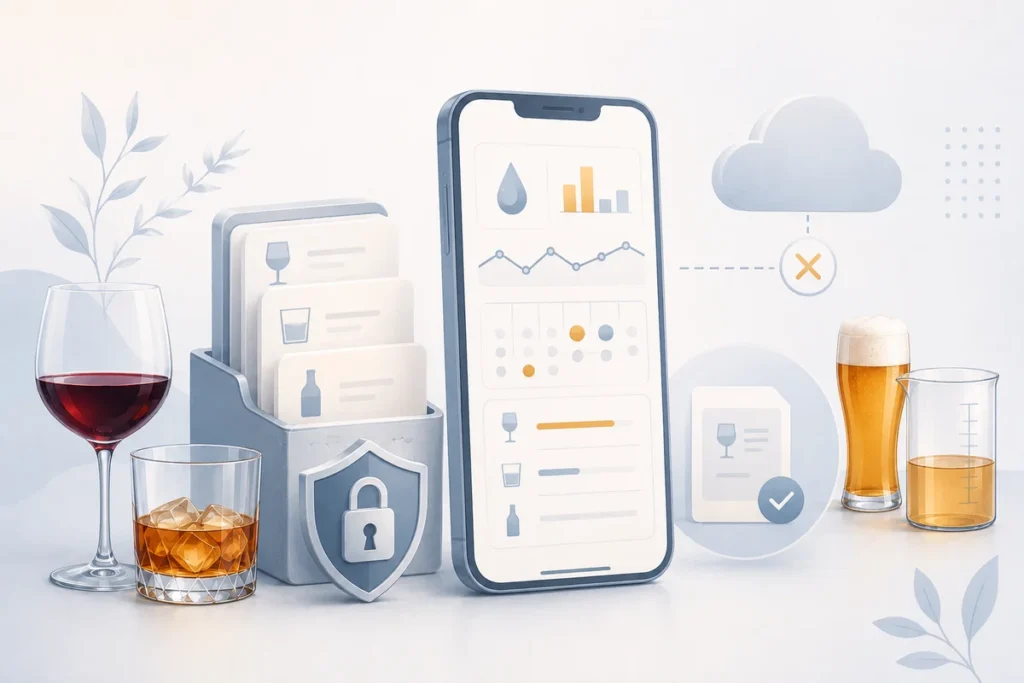
How to track alcohol without an account or cloud?
Local-first data on your device keeps observation under your control — no sign-up, cloud sync or shared history.
Read article -
Why BAC estimation cannot decide if you can drive
Blood alcohol estimates carry large uncertainty. Driving requires zero alcohol — a legal decision, not an app result.
Read article -
Alcohol and sleep — patterns you can notice
Alcohol may help you fall asleep but worsen sleep quality later in the night. Noticing your own patterns — not a diagnosis.
Read article
Observe your weekly rhythm with QS AlcoRhythm
QS AlcoRhythm helps you calmly track drinks, weekly limits and history — stored locally on your device, without an account.